The Embodied Revolution: Navigating the Dawn of Widespread Humanoid Robotics and Physical AI
The accelerated development and real-world deployment of humanoid robots and physical AI heralds a profound paradigm shift, poised to fundamentally reconfigure global industry, redraw geopolitical power dynamics, and reshape the very fabric of human-machine interaction.
The confluence of advanced robotics and sophisticated artificial intelligence has ignited an unprecedented acceleration in the journey from theoretical conception to tangible, widespread deployment of embodied intelligence. We are witnessing not merely an incremental technological advancement, but a foundational re-engineering of physical capability itself. This emergent epoch, characterized by the proliferation of humanoid robots and the pervasive integration of physical AI, demands incisive analysis of its technical underpinnings, a clear-eyed assessment of its geopolitical ramifications, and a forward-looking prognosis of its inevitable economic ripple effects.
Technical Mechanics: Architecting Embodied Intelligence
The leap from stationary industrial manipulators to agile, autonomous humanoids operating in unstructured environments is predicated on a series of synergistic technical breakthroughs. At its core, "physical AI" distinguishes itself from conventional automation by embedding intelligence directly into machinery, granting it the capacity to perceive, reason, and adapt to dynamic, imperfect real-world conditions. Unlike rigid, hard-coded systems, physical AI introduces "agency," allowing machines to 'see' their environment through advanced computer vision and sensing, process complexity at astonishing speeds via intricate algorithms, and learn from human training within their physical limitations. This transformative shift enables the creation of a "thinking warehouse," a self-correcting supply chain where intelligence permeates the flow of goods, optimizing every mechanical asset and providing critical predictive insights beyond human capacity.
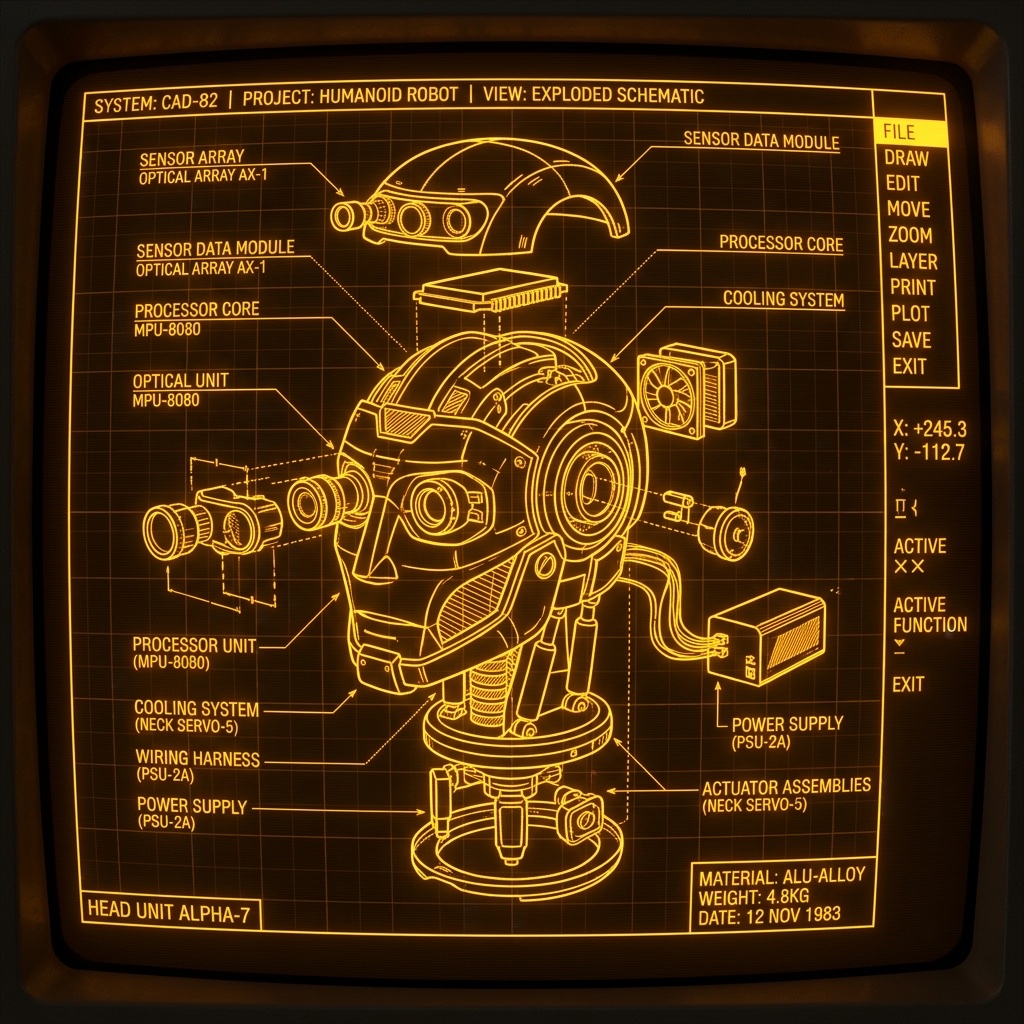
The technical mechanics of modern humanoid robots are a marvel of integration, synthesizing disparate fields into a cohesive, functional whole. Core to their newfound versatility are advancements in:
- Sensorimotor Control and Dynamics: Humanoid controllers, increasingly powered by reinforcement learning (RL), are mastering high-dimensional, underactuated robot dynamics. These sophisticated systems leverage hierarchical, hybrid, and end-to-end architectures to decouple high-level planning from low-level actuation, enabling robust locomotion, dynamic balance (e.g., push recovery), and whole-body manipulation. Unlike traditional model-based controllers, RL-based approaches can learn resilient responses to environmental uncertainties and model inaccuracies, often surpassing human-designed controls in versatility and resilience. Training methodologies like imitation learning, where robots learn from human demonstrations, are crucial for acquiring basic actions, while RL allows for iterative refinement through trial and error in complex environments.
- Perception and World Models: Equipping robots with human-level perception requires multimodal sensor fusion, advanced computer vision, and sophisticated spatial understanding. Foundation models for robotics, such as NVIDIA's Cosmos and Isaac GR00T, are emerging as critical components, trained on vast datasets of physical world interactions. These "world models" act as internal simulators, allowing robots to anticipate future outcomes, understand object dynamics, and predict how the physical world evolves under their actions. This capability of "dynamic prediction" allows robots to proactively anticipate changes, enhancing adaptability in unpredictable environments.
- Dexterous Manipulation: The ability to interact with objects of varying shapes, sizes, and textures with precision and appropriate force has been a persistent challenge. Breakthroughs in hand design, such as Figure AI's 19 degrees of freedom, and the integration of tactile sensing, are enabling fine manipulation previously considered impossible for industrial robots. This dexterity, combined with advanced AI reasoning, allows humanoids to perform complex tasks like tote picking, palletizing, line feeding, and even intricate assembly.
- Sim-to-Real Transfer: The prohibitive cost and risk of real-world robot training necessitate robust simulation environments. Platforms like NVIDIA's Omniverse create photorealistic virtual worlds where robots can undergo millions of training scenarios. The "sim-to-real gap," the discrepancy between simulated and real-world performance, is rapidly narrowing, with models trained solely in simulation now achieving significant real-world efficacy. This accelerates development cycles dramatically, transforming the speed at which capabilities are refined and deployed.
"The true power of physical AI is not in the individual robot; it is in the orchestration. The warehouse of the future will function as a single, cohesive intelligence."
Geopolitical Implications: The New Arms Race of Embodied Cognition
The accelerated development and deployment of humanoid robots and physical AI is far more than a technological race; it is a critical axis of geopolitical competition, rapidly reshaping national security doctrines and economic statecraft. The control of these embodied intelligence systems is increasingly seen as a direct determinant of future power.
The strategic implications are profound. Firstly, the "industrialization of cognition" through AI, particularly when embodied in robotic platforms, elevates manufacturing back to a central position in national strategy. Embodied automation, by reducing global labor-cost arbitrage, makes reshoring manufacturing more attractive in regions with reliable energy, infrastructure, and capital. Nations that can produce these advanced systems at scale will gain a significant competitive advantage.
Secondly, supply chains are becoming economically "militarized." If humanoids and advanced robotics become foundational productive assets, then critical components such as actuators, sensors, motors, magnets, batteries, and advanced AI chips transition from mere commodities to strategic industrial equivalents of military hardware. Rare earths, essential for many of these components, will further escalate in strategic value, becoming chokepoints of control. The ability to secure and control these complex, global supply chains is paramount for national resilience and competitive standing.
The competition between major powers, particularly the United States and China, is already intense. China is making an aggressive push in physical AI, demonstrating its capabilities on national stages and achieving significant deployment numbers. In 2025, China reportedly accounted for over 80% of global humanoid robot installations and more than half of the world's industrial robots. Its capacity for domestic manufacturing at scale has driven down robot costs, including humanoids, which are inherently complex and expensive to produce. Speculative forecasts even suggest China could deploy hundreds of millions of humanoids to offset demographic decline, potentially exporting these systems globally.
Conversely, the United States and the European Union, while leading in investment and market size for humanoid robotics in 2025 (US and EU each approaching $750 million compared to China's $242 million), face the challenge of translating innovation into widespread adoption and manufacturing scale. The US, recognizing the imperative, is grappling with the need for a comprehensive National Robotics Strategy, including the creation of data foundries for industrial AI to counter China's ability to compel data sharing. Investment in manufacturing infrastructure, tax incentives for robotics production, and streamlined regulatory environments are crucial for the US to avoid reliance on foreign hardware and components.
"Technological competition becomes geopolitical competition. Interpreting, predicting, planning, coordinating, and increasingly acting become scalable industrial functions. The strategic point, often misunderstood, is that AI does not simply 'add' to national power: it reorganizes it."
Deterrence itself is transforming. Beyond traditional military hardware, superior physical AI capabilities, from autonomous logistics to automated maintenance and, eventually, integrated military posture, will become central to national defense. The ability to command drone swarms, robot dog packs, and humanoid agents capable of autonomous decision-making in conflict zones will fundamentally alter military strategy and power projection.
Ethical considerations also weave into the geopolitical fabric. Discussions around the autonomous operation of robots, accountability in decision-making, data privacy, and the potential for algorithmic bias in systems deployed globally will require international cooperation and the establishment of robust ethical frameworks. Nations that lead in establishing responsible AI governance will also gain a soft power advantage.
Future Economic Ripple Effects: Reshaping the Global Economy
The economic implications of widespread humanoid robot and physical AI deployment are projected to be transformative, generating both immense opportunities and significant dislocations. The market itself is experiencing exponential growth, with Goldman Sachs projecting the global humanoid robot market to reach $38 billion by 2035, a sixfold increase from earlier estimates, and Morgan Stanley forecasting a staggering $5 trillion total addressable market by 2050 encompassing hardware, supply chains, and services.
One of the most immediate and profound impacts will be on labor markets. Demographic shifts, particularly in advanced economies facing declining working-age populations and labor shortages (projected 2.1 million unfulfilled manufacturing positions by 2030 in the US alone), are accelerating the demand for autonomous labor. Humanoid robots are uniquely positioned to fill these gaps, performing tasks that are "dull, dirty, or dangerous" or those that humans increasingly avoid.
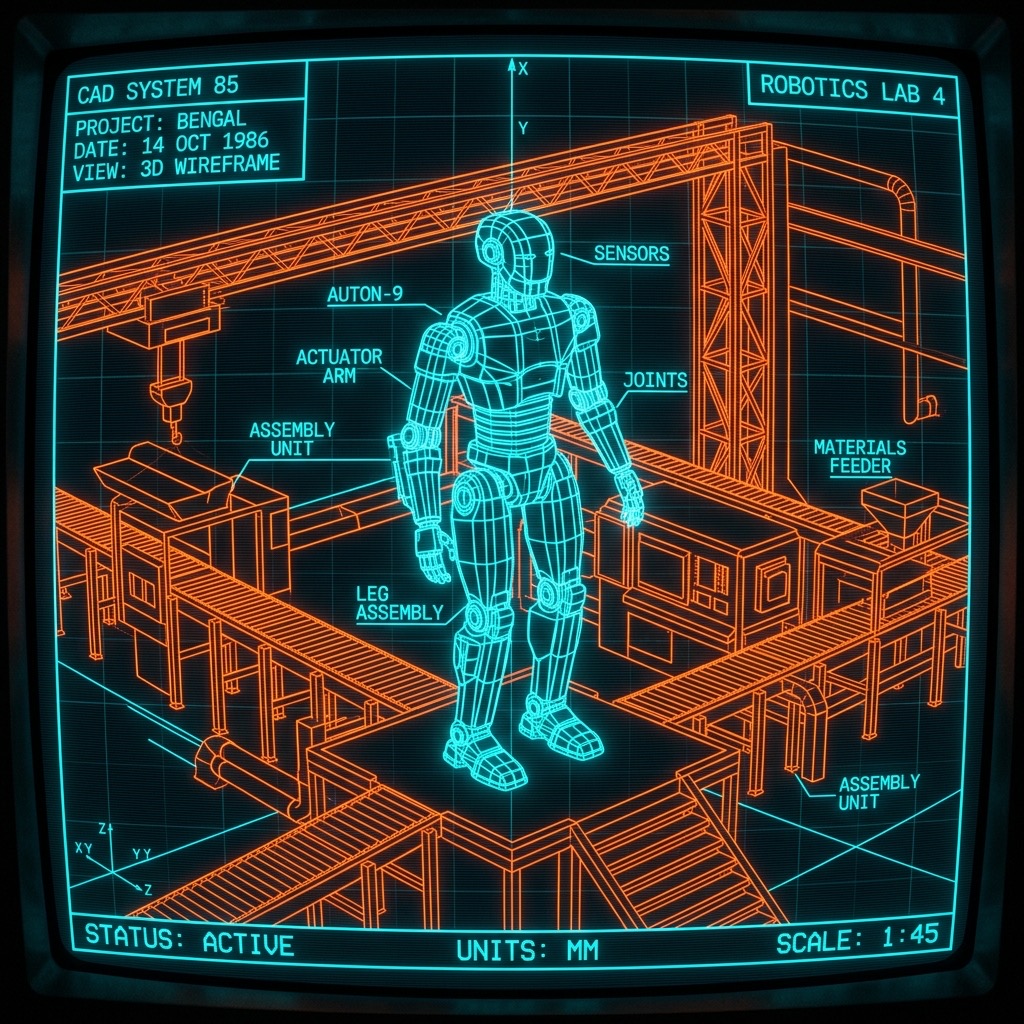
Early deployments are already underway in manufacturing, with companies like Tesla, BMW, and Mercedes-Benz integrating humanoids onto assembly lines for tasks such as tote picking, palletizing, and line feeding. Warehousing and logistics are also early adopters, driven by labor pressures and the need for 24/7 operations. Sectors like construction, agriculture, and healthcare, characterized by hazardous or repetitive tasks, are also poised for significant disruption.
While humanoids are expected to displace millions of jobs in specific sectors, projections also indicate the creation of new roles, though these will demand different skill sets. Morgan Stanley analysts estimate that by 2040, the U.S. could have 8 million working humanoid robots, impacting 75% of occupations and 40% of employees by 2050, affecting $3 trillion in payroll. The challenge lies in managing this transition, which is predicted to be economically painful for affected workers without proactive policy intervention. Governments will need to consider reskilling initiatives, social safety nets, and potentially new models for wealth distribution to address widening inequality.
Productivity and Economic Growth: The infusion of physical AI will undoubtedly drive unprecedented gains in total factor productivity. By reorganizing processes, reducing friction, accelerating innovation, and improving the quality of organizational capital, AI-driven automation will lead to a more efficient allocation of resources. Robots, capable of near-continuous operation, can significantly increase output, even at efficiencies lower than humans, translating to substantial productivity boosts. This structural response to labor shortages could ease demographic headwinds in many developed nations, sustaining economic output and competitiveness.
Cost Structures and Investment Landscape: The declining cost of humanoid robot production is a critical enabler of widespread adoption. Goldman Sachs reports manufacturing costs dropped 40% between 2023 and 2024, with unit costs rapidly approaching the $15,000-$20,000 range. This commoditization, coupled with advancements in component technology (e.g., lightweight batteries, improved mechanical systems), creates massive investment opportunities. The investment landscape is broadening beyond software and semiconductors to industrial automation, actuator and component manufacturers, and companies building robust robotic infrastructure.
"The humanoid robotics industry is no longer a futuristic fantasy — it's an economic force reshaping labor markets worldwide."
The convergence of physical and digital operations will blur traditional distinctions. Data, generated in real-time by goods, assets, and environments, will move in lockstep with physical reality, allowing organizations to operate with sharper clarity and faster response times. This transforms supply chains into living, self-sensing, learning systems. New industries will emerge, centered on the servicing, maintenance, programming, and ethical oversight of these advanced machines.
In conclusion, the accelerated trajectory of humanoid robot development and physical AI deployment represents a civilizational inflection point. The technical mastery now allows for machines to not only mimic human actions but to learn, adapt, and operate with agency in the physical world. This capability is fundamentally reshaping geopolitical competition, making control over these technologies a new determinant of national power and militarizing critical supply chains. Economically, while promising immense productivity gains and addressing labor shortages, it demands proactive foresight and policy innovation to manage the inevitable shifts in labor markets and prevent exacerbating societal inequalities. The era of embodied intelligence is not merely approaching; it is here, and its reverberations will define the contours of the 21st century.
Sources
- Physical AI in the supply chain: How its promise can be realized - https://vertexaisearch.cloud.google.com/grounding-api-redirect/AUZIYQHLNl_XbWLnX92cTyHFjLARR_5UG7LHJG1axNKVrylUGkRm9MsHXqBCStSp5GfSK7eIiT4HTXoy5kgmJzYHy9LfH2OsilPtbONTz0ZprQ4TLup3VfnIw2ilnUN_zbKdrCNlJLmZpWo94J8627NWisZeRYyfI6aRNoGb4O3Cu9tvYQCypLFlkZndpkv6l5-wn2FRJPARFm0oSsegtUMDTFtA_dV3
- Physical AI can help fix the teetering global supply chain - The World Economic Forum - https://www.weforum.org/stories/2026/01/physical-ai-global-supply-chain-am26-wef/
- The Ethical Implications of Humanoid Robots in Society - https://vertexaisearch.cloud.google.com/grounding-api-redirect/AUZIYQGdRVvwG6RKDH5AahSIIr2j6z02K9EHmiDdPPL31XMftw_Jko9OYyAMD2I5qA_ViiHEu3BIOJTIBoI0zf4QiKzQPFra1a64JO99i2x4kIOuSqPDVwBwwZ_GPxnUYvoQQ5XP1BCa-vIcsn8HwxEjIGEWRso=
- Physical AI: When Intelligence Enters the Flow of Goods | SupplyChainBrain - https://vertexaisearch.cloud.google.com/grounding-api-redirect/AUZIYQEEdLzdt5_sox5lOa4EmkXyT46glbQlsJ61pHUwGSDgyrRQBONld9gJIVpG0DJnn3uJ-LDp0JU2CMY5eHlIcbJVlLW0QyiNU55l5Ev1Hqj1NAjnnkNB3Hfbzur5aTZBfb3FhevxYy3wyN52e98z9_r2FliXks-Q5kH4zvo7OAhbmL2lhQGeUgoMzR1Z5ofhSg1ipmEgAdwf7qtKgCkc1CxNDBukrGr8ghrrEktAO7ztSg==
- Ethics - Humanoid - https://thehumanoid.ai/glossary/ethics/
- Ethical governance of AI-based humanoid carebots: the case for Ethics of Techno-care - https://pmc.ncbi.nlm.nih.gov/articles/PMC12960324/
- Humanoids and Artificial Intelligence: the global technology battle in the new geopolitical order. | by Marco Mizzau | Medium - https://medium.com/@marcomizzau/humanoids-and-artificial-intelligence-the-global-technology-battle-in-the-new-geopolitical-order-557339ac286c
- Humanoid Control via Reinforcement Learning - Emergent Mind - https://www.emergentmind.com/topics/humanoid-controller-via-reinforcement-learning
- Humanoid Robots: From Demos to Deployment | Bain & Company - https://vertexaisearch.cloud.google.com/grounding-api-redirect/AUZIYQE5ho2LiV5DY8E-qCQzIKi6c51OUHUy0QlbqcQJl_lUsLb5jdLfnFXF4bidfN5YiZovSVXv4W5kcWfZxS-ZA7p-tat3Naw8P2A3NSCqfWhBKTFMA__uSSyYiM3itFaPUjJlWM87mR5eXTtv36I-Hu2nP-aXykveOnoX3xq388KtmP6DIrP2ARg9vtf4VExuEZCfxmii3yg2QEQ=
- HuWo:Building Physical Interaction World Models for Humanoid Robot Locomotion - https://openreview.net/forum?id=bhUIoQ61pA
- What Are the Ethical Considerations Surrounding Robotics? - AZoRobotics - https://www.azorobotics.com/Article.aspx?ArticleID=709
- (PDF) The Ethics of Humanoid Robots - ResearchGate - https://www.researchgate.net/publication/370360172_The_Ethics_of_Humanoid_Robots
- Physical AI and the Self-Correcting Supply Chain - ASCM - https://www.ascm.org/ascm-insights/scm-now-impact/physical-al/
- AI goes physical: Navigating the convergence of AI and robotics - Deloitte - https://vertexaisearch.cloud.google.com/grounding-api-redirect/AUZIYQE-X6zFNDqhguv6CSTW-qoSawsDVHJh1WosGWoM_E45fBqXWwwcA26migszgnLPu_c_LGT5e8WwSuIQ3qJMO3n4iLOhpxnqzgtV0PRZMZ3C71Q_ADq9e128cEy5C8Iz44Iqb12w7hj5p1XY_wpKJrWUJcXaVigUb6iN7yB-xJnXljjk5V3p3b-4BZ23XCbrCeaG-ByvBSaBPcOwsQNJF58Gcj1JrfeYr-LWxBJZqRi8Fhg==
- Humanoid Robots & Jobs: Economic Impact - Robozaps Blog - https://blog.robozaps.com/b/economic-impact-of-humanoid-robots-on-job-market
- What is reinforcement learning in humanoid robot training? - Bonsystems - https://vertexaisearch.cloud.google.com/grounding-api-redirect/AUZIYQFykoJIyWtuDvVvUxav9QCFX4YsAY-Bnnbe06vWQk-jt2nDYs-PoCqs4s_fSzZZsZDEoOIhKifhXbpOJVFYB_EU-pupj7mI2VSogvWzU7lAQhp0gqbKtW8J98YqiYNN1hBftZZhGh02EIEVu8CL3zIRX7lcko2v9EQZrDK39q5MYfDttxrw==
- Could AI Robots Help Fill the Labor Gap? - Morgan Stanley - https://vertexaisearch.cloud.google.com/grounding-api-redirect/AUZIYQEoUfYhe4nn_q160c6rzufmzI9vzrbsSnjbk1KUft3KGgtIgPebGy4AuHPvifQKplPArb-L99J8q_dGGEGdrVDbNuVulnKrfxMY_eYfsAbE8xGoN5CxgrFoHiN1ZqXEedtEUOcXRmM5kJ28ewLjWLq0XKIvjOVT_Le2O--KNP-7DQM=
- NVIDIA and Global Robotics Leaders Take Physical AI to the Real World - https://nvidianews.nvidia.com/news/nvidia-and-global-robotics-leaders-take-physical-ai-to-the-real-world
- AI and Robotics: National Security Implications - https://cetas.turing.ac.uk/publications/ai-and-robotics
- Impact Series 14: AI Gets Physical - Barclays Investment Bank - https://vertexaisearch.cloud.google.com/grounding-api-redirect/AUZIYQEYYvKFWQbGK3yAEb0r7wRGlwGddYxYP-NZMA7FpsuYdMprLkOkH1k8vrnuzE98I8OnxiJzYDI7rsGUuPCVBPmKOFDm1zseL1Xg670tKe5Hsvo7pNwHHw59aYcWQUyYZ3W0H0UjkIQJvZgk-px2HECtJ9RMLThaBqHF1HDCOVrrUfbQO21ZbtL5Y_J0wcCcxuij7bkYdlEPHyyfPty-_AIv53NnLZ5OczSMHGnrofn7CSbhXigEa8OxfoaZPF59C9GRcmTH__yBOf06qTa7Kwql
- Physical AI - MLQ.ai - https://mlq.ai/research/physical-ai/
- Will Physical AI in Warehouses Change Retail Supply Chain Research? - https://luthresearch.com/glossary/will-physical-ai-in-warehouses-change-retail-supply-chain-research/
- China Could Dominate the Physical AI Future - TIME - https://time.com/7382151/china-dominates-the-physical-ai-race/
- The Future of Humanoid Robotics - https://www.recordedfuture.com/research/future-humanoid-robotics
- Humanoid Robots 2025 Archives & Updates - https://vertexaisearch.cloud.google.com/grounding-api-redirect/AUZIYQGBKkOu1nM7V4rShukIcnHqmbVh_FJR1jsGpy6fpNP3dRk4gWUghKo7oM1HSOAJjyxhPhaXVovZW1_JYCnB6vnQW7LIQiC3PFjZ0-U1F6ZUOeGTab_o4H-K0dcyqj2aJmZN5tjGaolZ8NhbMa-3cmb_
- HAIC: Humanoid Agile Object Interaction Control via Dynamics-Aware World Model - arXiv - https://arxiv.org/html/2602.11758v1
- AGP Insights - Humanoid Robots in 2025: Powering the Next Industrial Evolution | Asia Growth Partners - https://www.reddit.com/r/robotics/comments/1qeb9kj/agp_insights_humanoid_robots_in_2025_powering_the/
- 2025: The Year of the Humanoid - https://thehumanoid.ai/2025-the-year-of-the-humanoid/
- World-Gymnast: Training Robots with Reinforcement Learning in a World Model - arXiv - https://arxiv.org/html/2602.02454v1
- Memos to the National Robotics Strategy - SCSP - https://www.scsp.ai/wp-content/uploads/2025/02/Robotics-Memo.pdf
- Humans, AI and Robots: The economics of reinventing work and the workforce | Accenture - https://www.accenture.com/content/dam/accenture/final/capabilities/strategy-and-consulting/strategy/document/Accenture-Humans-AI-Robots.pdf
- America's AI Action Plan - The White House - https://vertexaisearch.cloud.google.com/grounding-api-redirect/AUZIYQFejjONT6POibMsMF2L6O5Drc9_mqOINqvv6GikyMd406s9mQUFYhSPWV1r1_-qFutQykN8QURM9LXn8K8-tzuOGvDQKlmMT2v79SqkWatD0pNJ2DQ8sJev_t-KBfULWYsLAtbqodKA-OFvsQ2iD_6_5-OxHZj4Gb6hTkv69OODz4T0Aivs1bImZ4jnWA==
- Transforming the physical world with AI: the next frontier in intelligent automation - AWS - https://vertexaisearch.cloud.google.google.com/grounding-api-redirect/AUZIYQHC74RtFn4SyABACWv_oLMfSdbaW1x53GetRyBBvWJzRlqTQZg-c_teRqi8bhXMwA_U_rSz5PUMEom8A3Akq77FtwTt-cXTtggonb7Z0qEsdRhEoD2Zt8UxZGOw9eH0SrWva3202zNBKnQls0vNJLcq5aHdRVKpe4rJRDee0wKw_dizhZGf5EkEA2tqP6-NcVdz2S7n1m8z-rWpGS4lFrb27GNnYPCtXvhaPVfDeb9Rxe3ywBkd4-WbSOB_5hCD
- Physical AI for Real World Robotics - Technology Innovation Institute (TII) - https://files-prod.tii.ae/2026-02/Physical%20AI%20for%20Real-World%20Robotics.pdf
Rolando Rabines is the founder of ROBOT WORLD and an investor in Physical AI through CAPAC. An MIT-educated engineer and CFA, his experience includes serving as a DARPA Systems Architect, Co-Founder of Macgregor, and leading Atomera through its IPO.
If you found this analysis useful, subscribe to ROBOT WORLD— and forward it to one colleague who should be reading this.
Disclaimer
The information presented in this article is for informational, educational, and analytical purposes only and does not constitute financial, legal, or investment advice. Do not make investment decisions based on this publication.